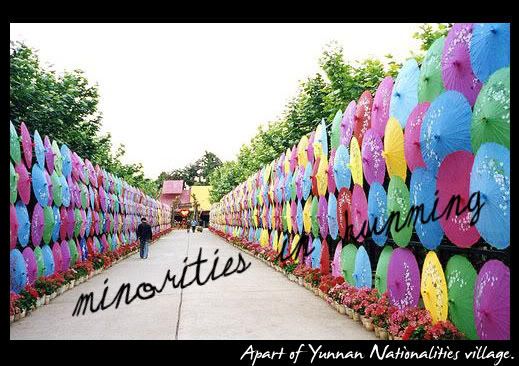
Hui People
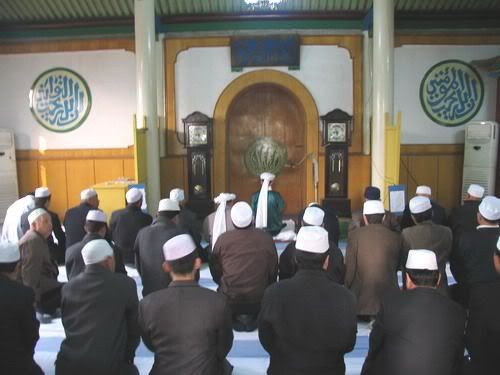
They are a Chinese ethnic group, typically distinguished by their practice of Islam. They form one of the 56 ethnic groups which also officially recognized by the People's Republic of China. They are concentrated in Northwestern China, but communities exist across the country. Most Hui are similar in culture to Han Chinese with the exception that they practice Islam, and have some distinctive cultural characteristics as a result.Example,As Muslims, they follow Islamic dietary laws and reject the consumption of pork, the second most common meat consumed in Chinese culture (chicken being the most), and have also given rise to their variation of Chinese and Chinese Islamic cuisine and Muslim Chinese martial arts.Included among the Hui in Chinese census statistics are several thousand Utsuls in southern Hainan province, who speak an Austronesian language related to that of the Cham Muslim minority of Vietnam, and who are said to be descended from Chams who migrated to Hainan
Etymology It was under the aegis of the Communist Party in the 1930s that the term Hui was defined to indicate only Sinophone Muslims. In 1941, this was clarified by a Communist Party committee comprising ethnic policy researchers in a treatise entitled on the question of Huihui Ethnicity (Huihui minzu wenti). This treatise defined the characteristics of the Hui nationality as follows: the Hui or Huihui constitute an ethnic group associated with, but not defined by, the Islamic religion and they are descended primarily from Muslims who migrated to China during the Mongol-Yuan dynasty (1206-1368), as distinct from the Uyghur and other Turkic-speaking ethnic groups in Xinjiang. The Nationalist government had recognised all Muslims as one of "the five peoples"—alongside the Manchus, Mongols, Tibetans and Han Chinese—that constituted the Republic of China. The new Communist interpretation of Chinese Muslim ethnicity marked a clear departure from the ethno-religious policies of the Nationalists, and had emerged as a result of the pragmatic application of Stalinist ethnic theory to the conditions of the Chinese revolution.Huis anywhere are referred to by Central Asian Turks and Tajiks as Dungans. In its population censuses, the Soviet Union also identified Chinese Muslims as "Dungans" and recorded them as located mainly in Kyrgyzstan, southern Kazakhstan, and Uzbekistan. In the Russian census of 2002, a total of 800 Dungans were enumerated. In Thailand Chinese Muslims are referred to as chin ho, in Myanmar and Yunnan Province, as Panthay
Religion Believe in one god, Allah. Just like the rest of the muslims.Pray five times a day at different timing.
Eat halal certified food and does not eat pork, lard or anything which is does not follow the muslim rules.
Dressing:
Male, covers from the waist to the knee.
As for the female, cover all parts of the body except the palms and face.
This is because this parts are supposed to be covered by the muslims as was dictated in the Holy book, Al-Quran.
Over there, their mode of dress also differs only in that adult males wear white caps and females wear headscarves or (occasionally) veils, as is the case in most Islamic cultures.
xoxo.
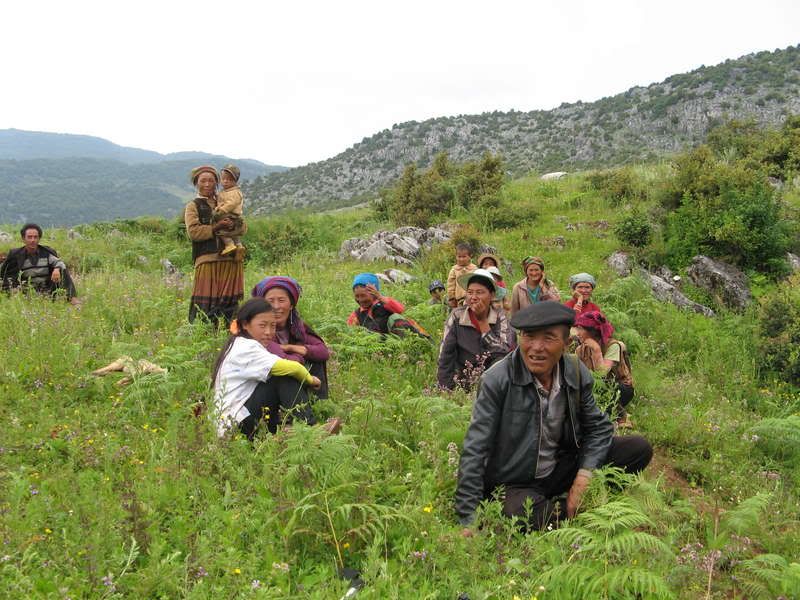
Diversity
A third of the Yi are literate and most had no written language.
Religion
The Yi are animists. (Daoism, shamanism and fetishism) Medicine men who are called Bimo officiate at births, funerals and weddings and often seen along the street consulting ancient scripts.
In Yunna, some of the Yi have been influenced by Buddhsim through the Han culture. The Yi believe in numerous evil spirits. They believe that spirits cause illness, poor harvests and other misfortunes and inhabit all material things. The Yi also believe in multiple souls. At death, one soul remains to watch the grave while the other is eventually reincarnated into some living form.
In the beginning of the 20th century, some Yi people in China converted to Christianity, after the arrival of medical missionaries such as Alfred James Broomhall of the China Inland Mission. According to missionary organization OMF International, the exact number of Yi Christians is not known. In 1991 it was reported that there were as many as 150,000 Yi Christians in Yunnan Province, especially in Luquan County where there are more than 20 churches.
Culture
The Yi play a number of traditional musical instruments, including large plucked and bowed string instruments as well as wind instruments called bawu and mabu.
xoxo.

History & Geography
Mathematics
Sports, Food & Lifestyle
Education system
Place of interest
Group reflection
Day 1
Day 2
Day 3
Day 4
Day 5
Day 6
Day 7
Day 8